Protecting Muscle While Losing Weight on GLP-1s
4 Effective Exercise Strategies for Midlife Women
When Maria started her GLP-1 medication at 49, she finally felt hopeful.
For the first time in years, food noise quieted. Portions became smaller without effort. The scale began to move. Friends noticed. Her clothes fit differently. On the surface, everything looked like success.
But a few months in, something felt off.
She was more tired than expected. Getting up from the couch felt harder. Carrying groceries took more effort. Her weight was dropping, but her strength seemed to be slipping with it.
Her weight was dropping, but her strength seemed to be slipping with it.
What Maria was experiencing is something women using GLP-1 therapy should be aware of: weight loss can include the loss of lean body mass, including muscle, particularly when nutrition and physical activity aren't supporting its preservation.
And after 45, that muscle becomes increasingly important.
Muscle supports far more than strength. It plays an important role in metabolic health, mobility, balance, healthy aging, and our ability to continue doing the everyday things we often take for granted. Midlife hormonal changes can already make maintaining muscle more challenging. Add reduced appetite and significant weight loss, and protecting muscle deserves some intentional attention.
Exercise is one of the ways we can give the body a reason to keep it.
For Maria, that meant changing how she thought about working out. Instead of focusing on harder workouts or burning more calories, she began choosing movement designed to help her stay strong.
Resistance Bands
She started at home, where exercising felt more manageable.
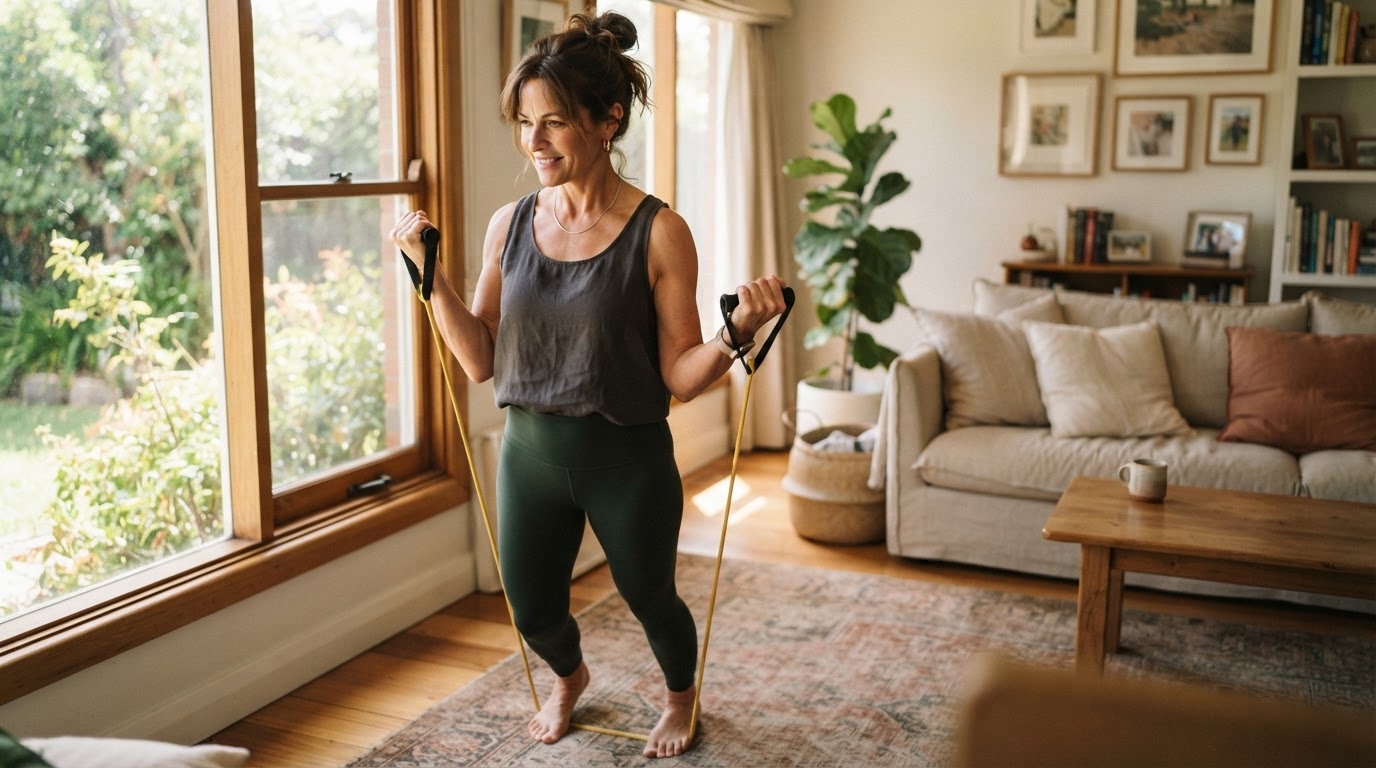
On days when her energy was good, she reached for resistance bands. They didn't look intimidating, but they could still provide a meaningful challenge. She used them for squats, rows, chest presses, and side steps, moving slowly and focusing on control instead of speed.
By the last few repetitions, her muscles felt worked, but not overwhelmed. Two to three sets were enough. Over time, she increased the resistance slightly — not chasing intensity, just building consistency.
Her joints tolerated the movements well, and strength training became something she could realistically incorporate into her week.
Bodyweight Exercises
On lower-energy days, Maria turned to simple bodyweight movements.
She practiced sit-to-stands from a chair, wall push-ups, glute bridges, and gentle step-backs. She discovered that slowing down a movement could make even a simple exercise surprisingly challenging.
She used the wall for balance when she needed it and rested between sets without feeling as though she had somehow failed the workout.
These short sessions didn't feel dramatic.
But they added up.
Her legs felt steadier. Her posture improved. Everyday activities began to feel easier again.
At the Gym
When Maria felt ready to return to the gym, she approached it differently than she had in the past.
Instead of automatically heading for a long cardio session or a high-intensity class, she spent more time with strength machines and free weights that allowed her to move in a controlled way.
She chose exercises that worked larger muscle groups — leg presses, seated rows, chest presses, and assisted squats. She selected weights that became challenging during the last few repetitions without sacrificing good form.
And she rested between sets.
Intentionally.
Two or three strength-focused sessions each week could give her body a meaningful reason to keep using the muscle she was working to preserve.
The gym became less about burning off calories and more about building something.
The gym became less about burning off calories and more about building something.
Cardio
Maria had always assumed cardio needed to be intense to count.
That belief changed too.
She began choosing lower-impact activities that supported her overall fitness without leaving her depleted. She walked indoors when the weather was poor, marched in place while watching television, and used step-ups at a comfortable pace.
Most importantly, cardio became one part of her movement routine rather than the entire strategy.
Walking, cycling, swimming, and other forms of cardiovascular exercise can support heart health, endurance, mood, and overall well-being. But when preserving muscle is a priority, strength and resistance work deserve a place in the plan too.
A Different Way to Think About Exercise
What surprised Maria most was what happened when exercise stopped feeling like punishment for what she had eaten — or simply another way to make the scale move faster.
Movement had a different purpose now.
She was protecting something.
She was protecting something.
Her strength mattered. Her mobility mattered. Her energy mattered. And the body she would be living in years from now mattered too.
GLP-1 medications can be powerful tools for weight management, but successful weight loss isn't simply about watching the number on the scale decline. Paying attention to nutrition, protein intake, strength training, hydration, sleep, and recovery can help support the body through the process.
For women in midlife, protecting muscle doesn't require perfection or extreme workouts. It requires giving the body a consistent reason to stay strong.
And sometimes that begins with something as simple as a resistance band, a chair, and twenty intentional minutes.
One Thing to Take With You
As the number on the scale goes down, remember to protect the strength that carries you through life.
— Your NovaPath Care Team